

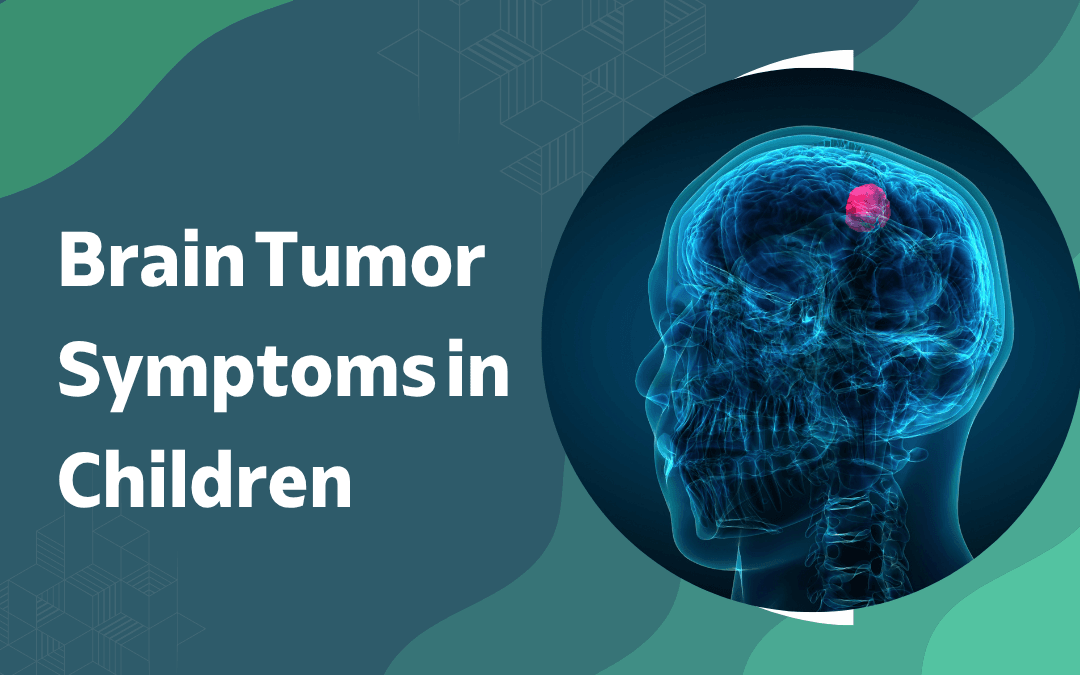
Brain tumors in children produce symptoms linked to rising pressure inside the skull, damage to surrounding tissue, or disrupted nerve pathways and the specific pattern depends on where the tumor sits and the child’s age. Common presentations include recurrent morning headaches, vomiting without a clear cause, sudden balance problems, and unexplained changes in vision or personality. Unlike adult brain tumors, pediatric cases often involve the cerebellum or brainstem first, which shifts the symptom profile toward coordination and gait disturbances rather than cognitive changes. Symptoms don’t always appear together. A single, persistent complaint is often enough to warrant imaging.
According to Dr. Gurneet Singh Sawhney, best neurosurgeon in Mumbai, “Children with a brain tumor rarely present with a single textbook symptom it’s the pattern over time that points toward something structural rather than functional.”
Noticed recurring headaches or vomiting in your child that won’t resolve with standard treatment?
What Early Warning Signs Should Parents Watch for in Children?
Early symptoms in pediatric brain tumors are easy to attribute to other causes, but specific clusters of signs do carry diagnostic weight.
Morning headaches: Headaches that appear first thing after waking, are worse when lying flat, and improve after sitting upright suggest elevated intracranial pressure rather than tension or migraine, especially if they occur more than two to three times per week without a fever or infection.
Nausea without cause: Vomiting in the early morning, unrelated to meals or gastrointestinal illness and without preceding nausea in some cases, points toward increased intracranial pressure and is more clinically significant when it accompanies headache rather than appearing alone.
Vision changes: Double vision, involuntary rapid eye movement, or a noticeable squint developing suddenly in a child who had normal vision should be investigated through both ophthalmological and neurological channels, not assumed to be a refractive error.
Balance problems: A child who’s stumbling more than usual, has trouble with fine motor tasks like buttoning a shirt, or shows a widened gait might be showing early cerebellar involvement, which is one of the more common tumor sites in children under ten.
Taken individually these signs don’t confirm a tumor, but a combination persisting beyond two to three weeks warrants prompt neuroimaging. For cases requiring surgical intervention, the surgical pathway falls under brain surgery protocols tailored by tumor grade and location.
How Do Symptoms Differ by Tumor Type and Location in Children?
Symptom presentation in pediatric brain tumors isn’t uniform it tracks the anatomy of where the tumor develops.
Brainstem tumors: These produce facial weakness, difficulty swallowing, or changes in voice quality early on, sometimes before headache or vomiting appears, because the brainstem controls cranial nerve function and the symptoms reflect pressure on specific nerve nuclei rather than diffuse pressure.
Supratentorial tumors: Tumors above the tentorium cerebelli are more likely to cause seizures, one-sided weakness, or speech difficulties, and in younger children these can present as sudden behavioral shifts or developmental regression that parents mistake for psychological causes.
Spinal extension: Some posterior fossa tumors spread down into the spinal canal, adding neck stiffness or back pain to the clinical picture symptoms that rarely point a parent toward a brain tumor without specialist input.
Infratentorial location: Tumors in the posterior fossa, which account for the majority of pediatric brain cancers, produce pronounced functional neurosurgery-relevant symptoms including ataxia, hydrocephalus from blocked cerebrospinal fluid drainage, and accelerated head growth in infants whose skull sutures haven’t yet fused.
Location largely determines which symptom cluster appears first, and that cluster often shapes the urgency and approach of the initial workup. Parents and clinicians who don’t link the symptom pattern to anatomy tend to delay the imaging that would clarify the picture. For a detailed account of what surgical management involves, see brain tumor surgery in India.
Why Choose Dr. Gurneet Singh Sawhney?
Dr. Gurneet Singh Sawhney holds MBBS, MS (General Surgery), and MCh (Neurosurgery) qualifications, standing first in the MCh university examination, with fellowship training in Functional Neurosurgery and Epilepsy Surgery from Tokyo Women’s Medical University and Juntendo University, Japan, backed by over 18 years of overall surgical experience and specialised expertise in Neuro-oncology and Neuroendoscopy.
His team has managed pediatric and adult brain tumor cases requiring awake craniotomy, intraoperative cortical mapping, and endoscopic approaches and the focus in every case is preserving neurological function, not just reducing tumor volume.
Frequently Asked Questions
Can a brain tumor in a child be mistaken for a psychiatric condition?
Yes, behavioral changes and mood shifts can mask an underlying structural diagnosis.
At what age are pediatric brain tumors most commonly diagnosed?
Peak incidence occurs between ages five and ten, though tumors arise at any age.
Does a brain tumor always cause headaches in children?
Not always some children present with balance problems or vision changes first.
Is surgery always required for a child diagnosed with a brain tumor?
Not in every case tumor type, location, and grade determine the treatment pathway.
Disclaimer: The information shared in this content is for educational purposes only and not for promotional use.